


Designing Permission
In the first phase, space taught us how to behave. We learned where to stand, how to move, when to sit, when to lower our voice. Architecture organized us through repetition and hierarchy until obedience felt indistinguishable from comfort. No one needed to enforce it. The room had already rehearsed the choreography.
Now the choreography answers back.
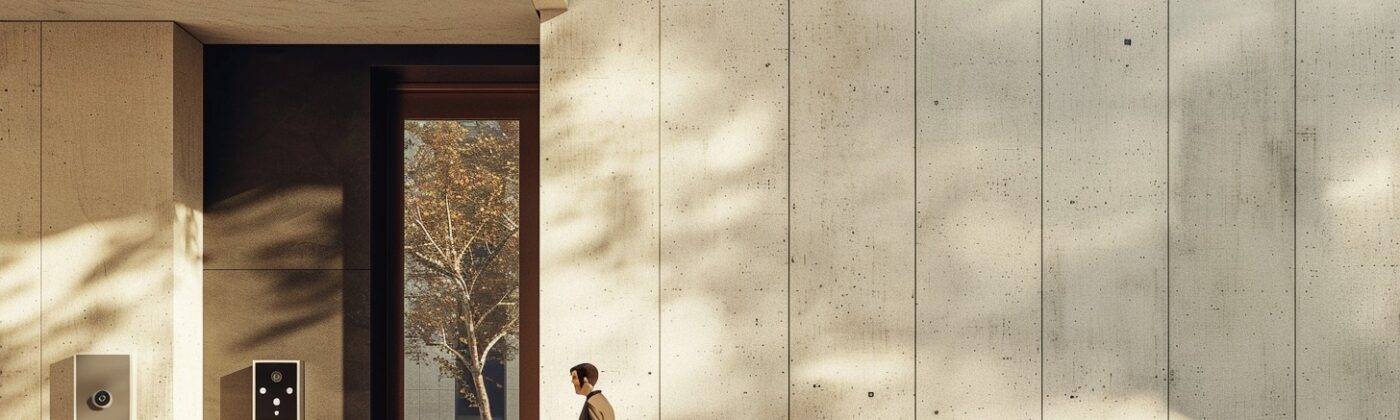
Now something subtler has taken hold. The building no longer simply arranges us; it evaluates us. The door does not wait for you the way it used to. It waits for proof. The building no longer assumes your presence; it verifies it. Somewhere between the corridor and the database, architecture stopped being arrangement and became decision.
Gilles Deleuze described a shift from disciplinary societies to societies of control, a transition from enclosed spaces that mold behavior to systems that continuously modulate access. Under discipline, we were organized within rooms. Under control, we are filtered as we move through them. We are not confined in obvious ways; we are calibrated. Access becomes conditional rather than spatially absolute.
This shift is rarely framed as control. It is described as efficiency, security, integration. We call it smart infrastructure. We praise seamless entry systems and frictionless circulation. We speak about user experience. But what has changed is not simply the technology embedded in architecture. What has changed is the threshold itself. Presence is no longer given; it is granted.
Recognition is the new threshold.
But recognition is selective.
Félix Guattari wrote about machinic assemblages, networks of systems that quietly produce certain kinds of subjects. Architecture now participates in these assemblages. The wall is no longer the primary boundary. The database is. Decisions are made before the hinge ever moves. You stand before a door, and the outcome has already been determined elsewhere, in permissions, in protocols, in invisible hierarchies that do not appear in elevation or section.

We design these conditions.
As architects, we do not stand outside this logic. We design it. We coordinate circulation with access control systems. We position checkpoints where geometry can absorb them without visual disruption. We integrate sensors so that surveillance remains aestheticized and therefore invisible. We align our plans with regulatory requirements and liability frameworks. We tell ourselves we are responding responsibly to contemporary demands. Yet responsibility has become inseparable from regulation.
But reality is being constructed precisely here.
Under discipline, deviation was visible. One could see who did not belong. Under control, deviation is prevented before it occurs. The system does not correct behavior; it determines eligibility. You do not misbehave. You fail authentication. And because this failure is procedural rather than confrontational, it feels neutral, even fair. The door either opens or it does not. There is no raised voice, no obvious barrier, and no theatrical display of exclusion.
Michel Foucault demonstrated how power reorganizes bodies within space. This phase reorganizes presence itself. Architecture no longer shapes only how we move; it determines whether we are admitted into movement at all. We have moved from drawing walls that confine to designing systems that decide.
This feels neutral. Objective. Technical. A glitch, perhaps. A database error. But the error is not in the hinge. It is in the hierarchy that determined eligibility long before you arrived. What unsettles me is how ordinary this has become. Recognition feels like convenience. A badge works, a face unlocks a screen, a gate responds instantly. We are known, and being known feels reassuring. Until it does not. When access is denied, there is no visible antagonist. There is only a quiet refusal embedded somewhere beyond the architecture we can see.
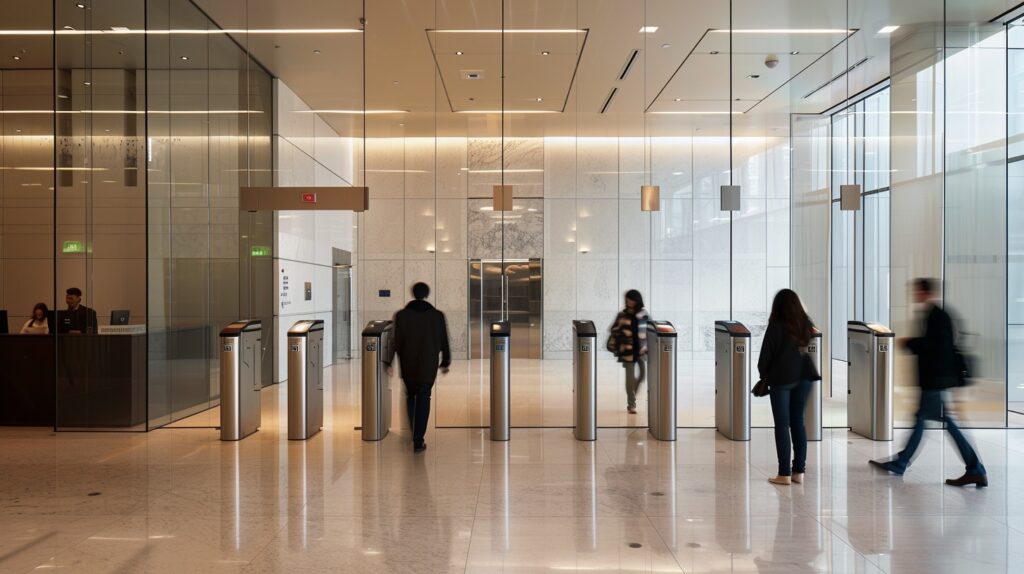
Jacques Derrida argued that every structure contains what it excludes. In automated environments, exclusion is no longer expressed through heavy material boundaries. It exists in code, in lists, in permissions that operate without spectacle. Because these exclusions are invisible, they appear objective. The system is simply functioning.
And this is where it becomes difficult to step back.
We have learned to call this progress. We celebrate frictionless entry. We design buildings that “respond” to their users. But response is not neutral. A building that responds can also ignore. A system that recognizes can also erase.
Architecture once shaped how we behaved once we were inside. Now it determines whether we count as inside at all.That shift did not arrive dramatically. It arrived through coordination meetings, through risk assessments, through software updates, through phrases like “smart integration.” It arrived through us. We still draw plans, but those plans are increasingly aligned with systems that categorize and filter. We still speak of clarity, but clarity now extends beyond form into authorization. We have made control procedural.
The unsettling realization is not that buildings restrict us. It is that we have learned to design restriction as seamless integration. Control no longer looks like force. It looks like optimization.
And because it looks like optimization, we rarely question it.
The room still teaches obedience.
But now the building decides who gets to be taught.